How AURAA Studio Gained Better Control Over Project Time and Invoicing
Read about how Milient Project Flow helped Auraa Studio move away from spreadsheets.
Key Takeaways
- Replacing manual processes: AURAA Studio previously relied on memory, handwritten calendars and inconsistent time recording to manage projects.
- Improved project visibility: With Milient Project Flow, the practice gained a clearer understanding of project time, progress and invoicing stages.
- Better team independence: Centralising project information made it easier for team members to access updates without relying on the practice owner.
- More informed decisions: Consistent time tracking provides useful data for reviewing project fees, workloads and resource allocation.
From informal project tracking to clearer visibility across time, resources and invoicing.
For architecture practices, managing multiple projects while keeping track of time, fees and resources can quickly become challenging.
For AURAA Studio, a specialist architecture practice founded by Raphael Lee in 2016, much of this information previously relied on memory, handwritten calendars and informal processes.
As the practice developed, the team needed a more structured way to manage projects and understand how work was progressing.
With Milient Project Flow, AURAA Studio has been able to bring greater visibility to project time, invoicing stages and resource planning, helping the team make more informed decisions.
Watch the on-demand webinar
The Challenge
For smaller architecture practices, managing multiple projects while keeping track of time, fees and resources can become increasingly challenging, particularly when working on fixed-fee projects.
At AURAA Studio, founder Raphael Lee previously relied heavily on memory and handwritten calendars to keep track of project information. Although the practice had used time recording software, timesheets weren't always completed consistently.
As the practice developed, AURAA Studio needed a better way to answer questions such as:
· How much time is being spent on individual projects?
· Are project hours aligned with the agreed fixed fees?
· Which project stages are complete, and what is ready to invoice?
· How can team members access project information without relying on one person?
Without a centralised system, maintaining a clear overview of project progress, invoicing and team responsibilities required additional effort.
The Solution
AURAA Studio introduced Milient Project Flow to bring time tracking, project management, resource planning and invoicing information into one place.
By recording time against projects, the practice can better understand where hours are being spent and how workloads relate to agreed fees. Having greater visibility into project and invoicing stages also helps the team keep track of completed work and upcoming invoices.
Rather than relying on Raphael to provide project updates, team members can access shared information to understand responsibilities and progress.
This gives AURAA Studio a more structured way to manage day-to-day work, support team independence and make informed project decisions.
About AURAA Studio
Founded in 2016 by Raphael Lee, AURAA Studio is an architecture practice specialising in projects involving conservation areas and preparing tender packages for developers.
Working on fixed-fee projects, the practice focuses on delivering architectural services while maintaining a clear understanding of project time, resources and progress.
.png?width=500&height=500&name=Raphael%20circle3%20(3).png)
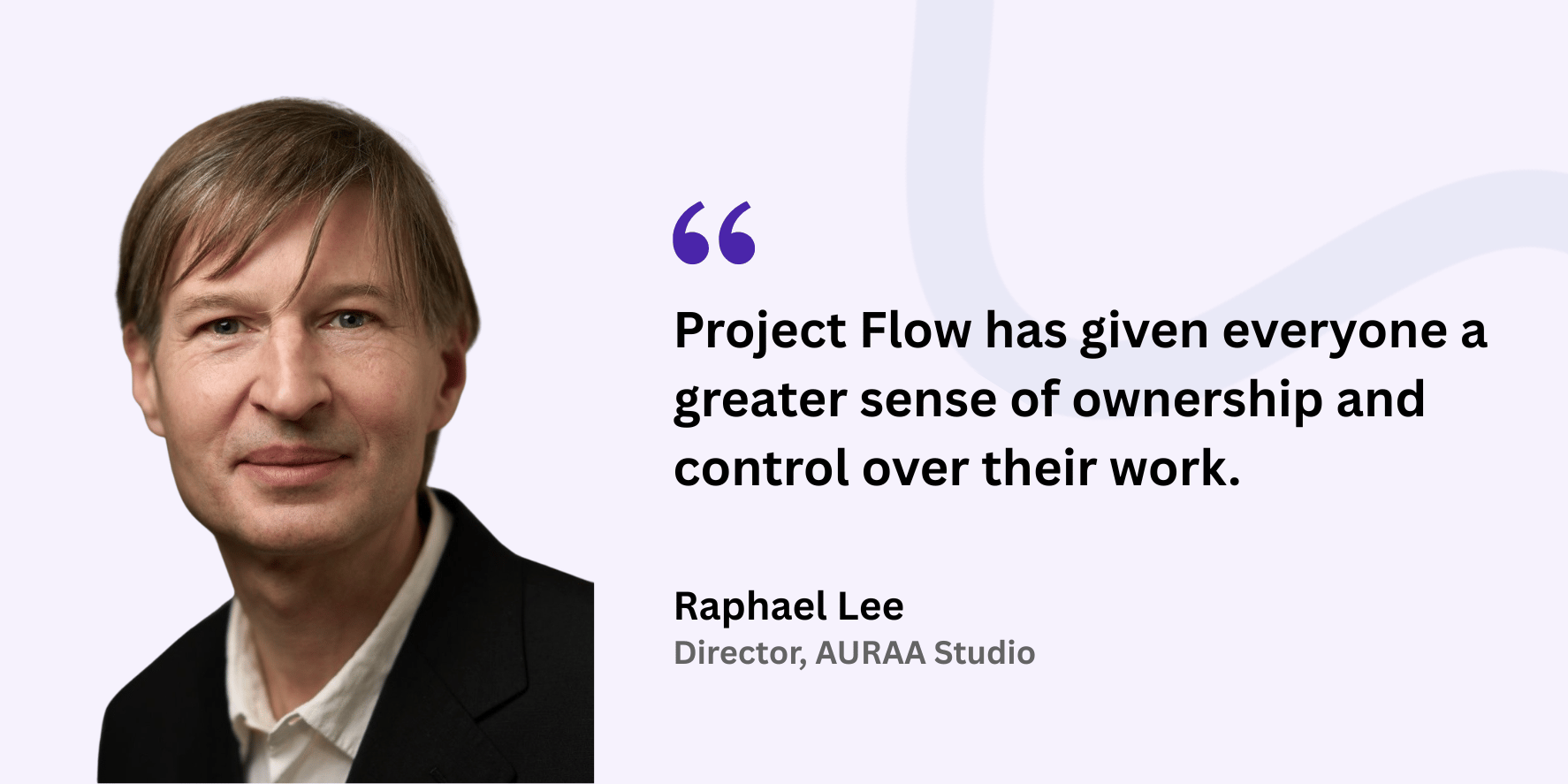
“Introducing a proper system into a small practice is a significant change, but it has given everyone a greater sense of ownership and control over their work."
Raphael Lee
Founder | Auraa Studio
Advice for Other Architecture Practices
Introducing project management software can feel like a significant change, particularly for smaller practices that have relied on informal processes for years.
However, AURAA Studio's experience demonstrates the value of establishing more consistent systems for recording time, organising projects and sharing information.
Raphael's message to other practices considering a similar change was simple: don't be frightened to adopt a system.
For architecture firms looking to improve project visibility, taking that first step towards more structured processes can provide a foundation for better decision-making as the business develops.
Looking to Improve Project Visibility in Your Architecture Practice?
Managing projects shouldn't mean relying on spreadsheets, handwritten notes or information held by one person.
Milient Project Flow helps architecture and engineering firms bring time tracking, project budgets, resource planning and invoicing together in one system.
Whether you're looking to understand where project hours are going, monitor fees or improve visibility across your practice, Milient can help you manage projects with greater control.
FAQ's
What is the best project management system for small architecture practices?
How can architecture firms move away from spreadsheets?
Architecture firms can move away from spreadsheets by using a project management platform that centralises project information, timesheets, tasks, invoicing stages and team responsibilities.
Auraa Studio had previously relied on informal processes and disconnected data, but Milient gave the practice a more structured way to manage projects without everything depending on one person’s memory.
Why do small architecture practices need time tracking?
How can architects improve project invoicing?
What are the benefits of project management software for architects?
Is Milient suitable for small architecture practices?
Would you like to know more about Milient?
Get full control over your projects and resources with a complete project management tool. Project management, time registration, resource management and invoicing – all in just one system. Book a meeting today!