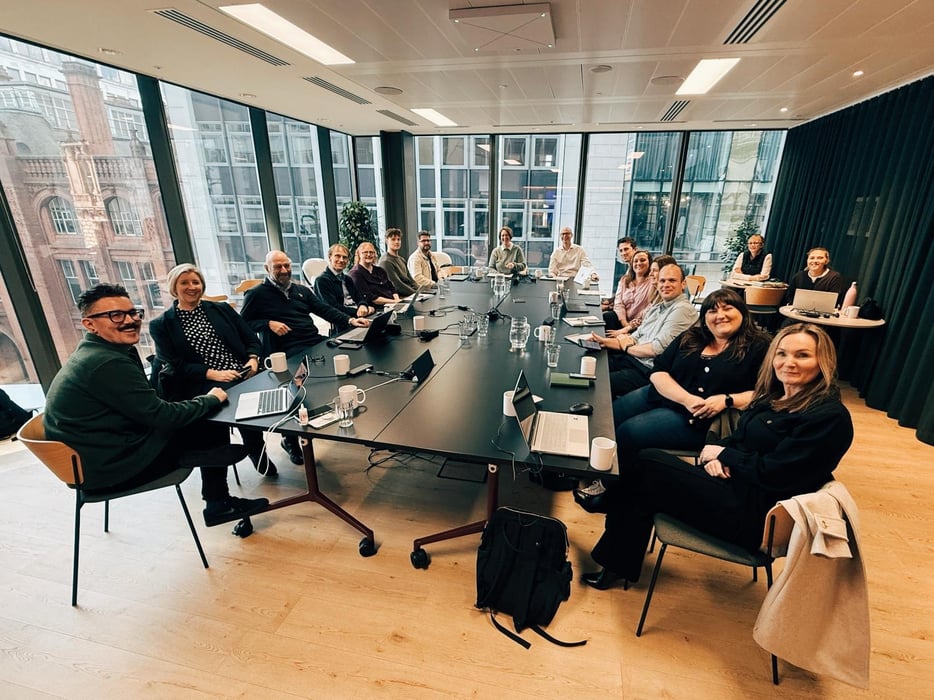
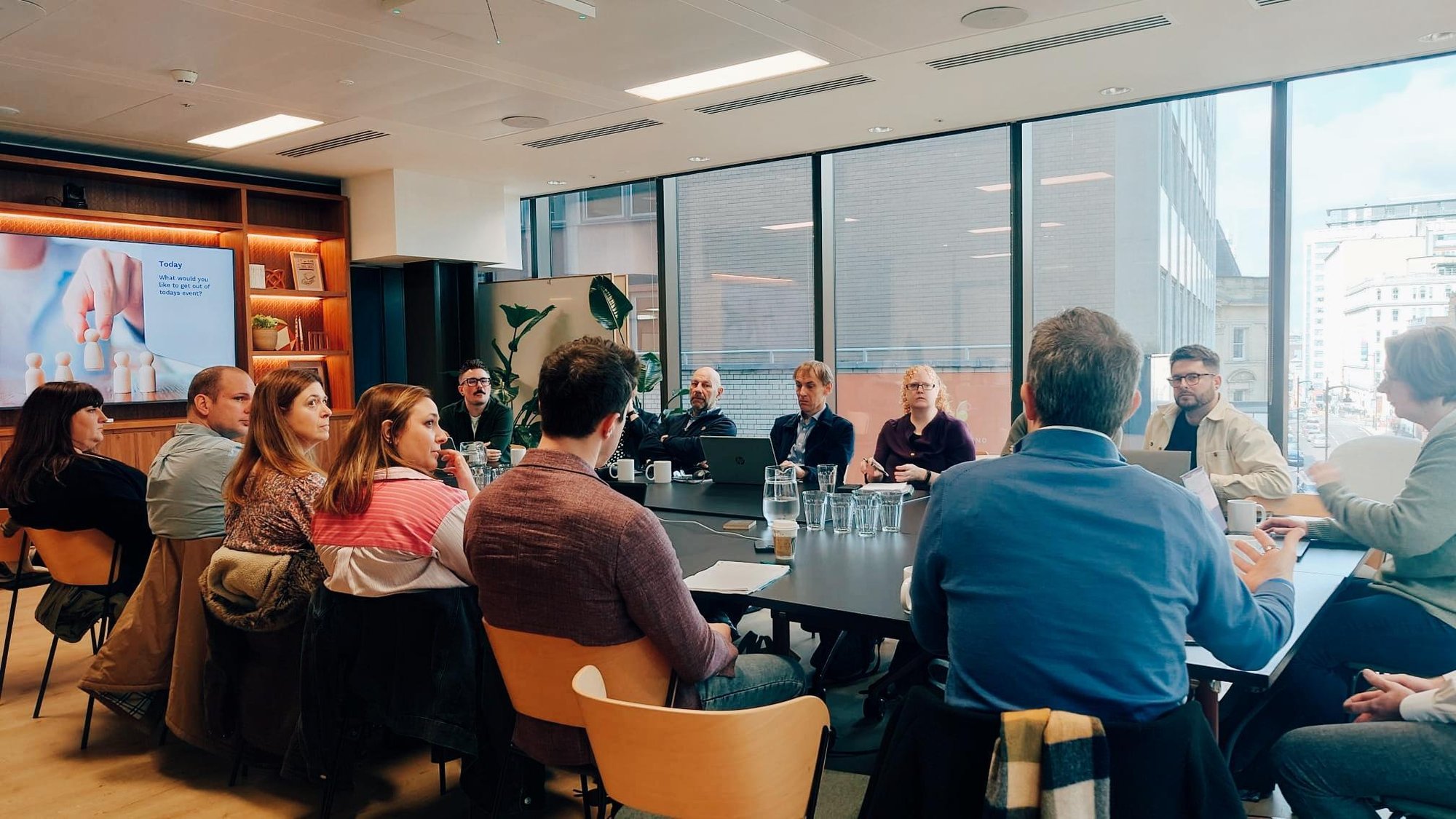
Last week we hosted our latest Project Truth Roundtable in Birmingham, bringing together professionals from across architecture, engineering and construction (AEC) to discuss the operational and regulatory challenges shaping the industry today.
The session created a space for open conversation between practice leaders, operations specialists, and project professionals, exploring how firms are adapting to increasing compliance pressures, new technologies, and evolving project delivery expectations.
From AI adoption and data governance to project documentation, compliance workflows and knowledge management, the discussion highlighted how practices are balancing innovation with the need for stronger operational control.
AI in AEC: Opportunities and Responsibilities
Artificial intelligence was one of the most widely discussed topics during the roundtable.
Many practices are already experimenting with AI tools to support tasks such as:
- Bid writing and proposal preparation
- Meeting summaries and documentation
- Contract analysis
- Data reporting and project insights
However, the conversation quickly moved beyond the tools themselves.
Participants highlighted the importance of data governance and security, particularly when dealing with sensitive project or client information. Several organisations explained they are exploring internal AI environments or restricted AI usage policies to ensure data remains protected.
“The biggest complaint people have is that they don’t have enough time, whether that’s filling in systems, doing training, or adopting new tools.”
AEC Practice Leader
Roundtable Participant
The Growing Need for a “Single Source of Truth”
Another key theme was the challenge of managing project information across multiple systems.
In many practices, project data can still be scattered across:
- Email threads
- Shared drives
- Project management tools
- Spreadsheets
- Document management systems
This fragmentation can make it difficult to maintain a clear audit trail or quickly retrieve information when needed.
Many organisations are therefore looking to create a single source of truth where project documentation, policies, and operational knowledge are stored and structured.
Compliance and Audit Readiness
Project Documentation and Long-Term Risk
Another important discussion focused on project documentation and risk management.
Claims and disputes in the built environment can emerge years after a project has been completed, when teams may have moved on and information becomes harder to retrieve.
Without a clear record of project decisions, communications, and responsibilities, responding to these issues can be extremely time-consuming.
Many practices are therefore prioritising better project tracking and documentation processes, ensuring that key information is captured throughout the project lifecycle rather than reconstructed later.
“For ISO audits I can just log into the portal and show the policies, risk assessments and documentation straight away.”
Roundtable Participant
The Human Challenge: Getting Teams to Engage
While technology can support better processes, the roundtable also highlighted a practical challenge faced by many firms: time pressure on project teams.
Architects and engineers are often balancing tight deadlines, client expectations, and complex design work. In this environment, administrative tasks such as updating systems or uploading documentation can sometimes be overlooked.
Participants agreed that systems must be simple, intuitive, and integrated into everyday workflows to succeed.
When tools support teams rather than adding friction, adoption becomes much easier.
Collaboration Across the Industry
One of the most valuable aspects of the roundtable was the opportunity to bring different perspectives together.
While each organisation approaches these challenges in its own way, there was a strong sense that many practices are facing similar operational pressures.
By sharing experiences and practical solutions, conversations like these help the industry move forward together.
Looking Ahead
As the AEC sector continues to evolve, practices will need to balance innovation, compliance, and operational efficiency more carefully than ever before.
Technology will undoubtedly play a major role, but the discussions at the Project Truth roundtable highlighted that success will ultimately come from combining strong processes, good governance, and collaborative knowledge sharing.
We’ll be sharing more insights from future roundtables as the conversation continues.
Continue the Conversation
A huge thank you to everyone who joined the discussion and shared their experiences, and to CPW for hosting us.
If you’d like to learn more about how practices are improving knowledge management and compliance processes, explore how Milient Knowledge Portal helps teams centralise information, manage risk, and support better project delivery.
 Andrea Neeve
Marketing Associate
Frequently Asked Questions
Want more content like this? Follow Milient:

/roles.png?width=1024&height=1024&name=roles.png)